
Book Reviews
More Water Books!

We’re in the middle of a cold snap here in southern Ontario. The snow has been relentless and temperatures have dipped below -20 degrees Celsius. During my hibernation, I’ve been reading a lot and in the past month or so, I’ve finished three water-related books and written a short review of each, below.
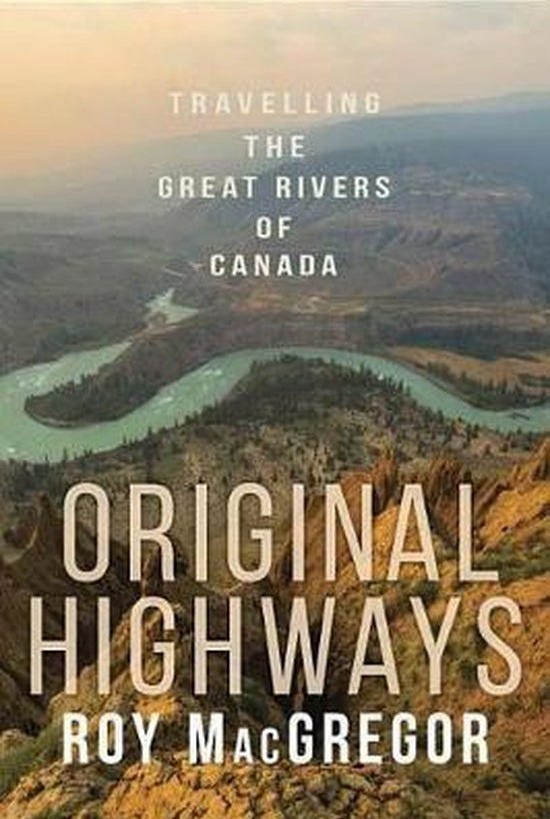
Original Highways, by Roy MacGregor (2017). is subtitled “Travelling the Great Rivers of Canada”. In this book, the Canadian author has written detailed, well-researched chapters on 16 different rivers in Canada. The chosen rivers range from as far east as the Saint John River in New Brunswick, to the Fraser and Columbia Rivers in British Columbia to the mighty Mackenzie River in the Northwest Territories, which, at over 4,000 kilometres, is Canada’s longest river.
MacGregor goes into tremendous detail about each of his chosen rivers. He includes the exploration and discovery (from the colonial perspective) and writes about the importance of each river in Canada’s history. He also covers some of the issues that the rivers have faced. The Don River in Toronto, for example, is only 38 kilometres long, but has been known as one of Canada’s most polluted rivers. He includes three rivers that we share with the USA: The St. Lawrence River, the Niagara River and the Columbia River. All three are used for generating hydroelectric power and both the St. Lawrence and the Niagara include canals and locks that have allowed immense cargo ships to travel from the Atlantic Ocean to the Great Lakes. MacGregor also covers the relationships that First Nations have with the rivers. In some instances, when a river is dammed, the tribes have had to relocate.
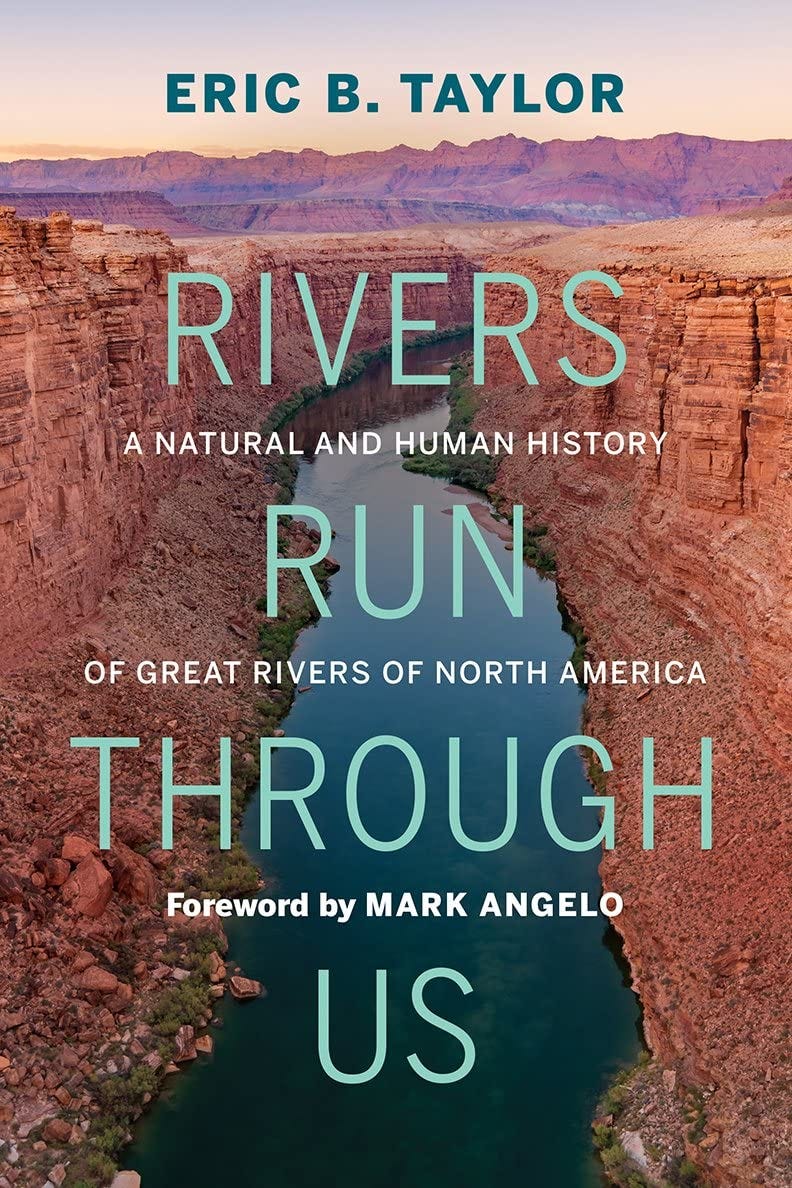
Rivers Run Through Us, by Eric Taylor (2021), subtitled “A Natural and Human History of Great Rivers of North America”. The author is a professor of Zoology at the University of British Columbia and has written another impressively researched book about rivers. In his book, Taylor includes detailed chapters on ten of North America’s most-impressive rivers, including the Hudson River that flows through New York City, the Colorado River that cuts through the Grand Canyon and has two countries and seven states that rely on its water. The book also includes the Yukon River that flows into the Bering Sea through Alaska, but has headwaters in the Yukon Territory and British Columbia.
Taylor covers the geologic history of each river in great detail. The relationship between the flowing water in rivers and the surrounding geology go hand in hand and this book covers why each river flows the way it does and how that flow has changed over time. For each river, Taylor writes about the human history of the river, including the exploration by Europeans and the relationship that Indigenous cultures have had with these rivers. Some of these rivers are heavily engineered with dams and canals and while these structures have some benefits (electricity, water availability), they can also result in environmental damage. For example, on the Fraser River in BC, dams have prevented salmon from reaching their natural spawning locations upstream. On the Colorado River, canals divert water away from the river to California and Arizona, such that there is little or no flow from the river into the Pacific Ocean.
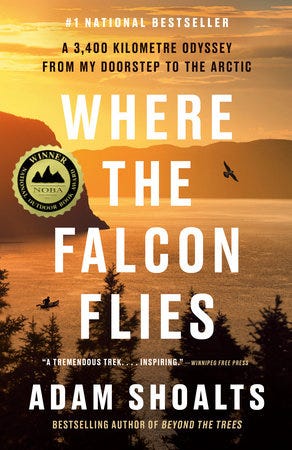
Where the Falcon Flies, by Adam Shoalts (2023): My third and final mini book review is by Canada’s modern-day explorer, Adam Shoalts. If you’re familiar with his work, you’ll know that Shoalts has been on adventures across Canada that the rest of us couldn’t even imagine. For this adventure, Shoalts left his home near Long Point on Lake Erie and canoed/hiked/bushwhacked some 3,400 kilometres to the Kangiqsualujjuaq which is an Inuit village located at the mouth of the George River on the east coast of Ungava Bay in Nunavik, Quebec. This epic expedition included canoeing Lake Erie, the Niagara River (portaging around Niagara Falls, of course!), the entire length of Lake Ontario and pretty much the entire length of the St. Lawrence River, before hiking/backpacking north for days until he reached canoeable rivers to take him further north.
Shoalts’ observations of the Great Lakes of Erie and Ontario provide a perspective that we don’t often think about. In addition to familiar cities such as Toronto, Hamilton, Kingston, for example, he saw many kilometres of uninhabited shoreline along both lakes and the St. Lawrence. When he began his travels north, away from the St. Lawrence, his journey became much more remote, similar to his previous expeditions, recounted in books such as “Beyond the Trees” ( a 4,000 kilometre canoe trip across Canada’s Arctic), and “Alone Against the North” (a solo expedition through the Hudson Bay Lowlands).
Thanks for reading the Water Droplet! Stay tuned for more interesting articles on water. To get email notifications of new articles, enter your email here, to subscribe: